
Summary
You know yourself. You've known yourself for decades. And somewhere in the last year or two, you've started to feel like that person has quietly slipped away.
Maybe it's the tiredness that no amount of sleep seems to fix. The brain that used to run sharp and fast, now foggy and slow. The flatness where desire used to be — not just physical, but the desire for things, for life, for yourself. You're still showing up. Still doing everything you're supposed to do. But you're doing it on empty.
This isn't weakness. It's hormones. And there is something specific you can do about it.
Hormone yoga is a practice designed specifically for this — for the hormonal shifts of perimenopause and menopause, and for exactly the symptoms you're living with. Not yoga-as-stretching. Not yoga-as-relaxation. A targeted, 30-minute practice designed to work with your body's own endocrine system to help rebalance the hormones that govern your energy, your sleep, your mood, and your desire.
This guide covers everything: what hormone yoga is, how it works, what to expect, and whether it's right for you.
What Is Hormone Yoga?
Hormone yoga is not a style of yoga in the way vinyasa or yin are styles of yoga. It is a specific, structured practice combining targeted physical poses, particular breathing techniques, and energy-directing work — designed with one clear purpose: to stimulate your body's hormone-producing glands and support natural hormonal balance.
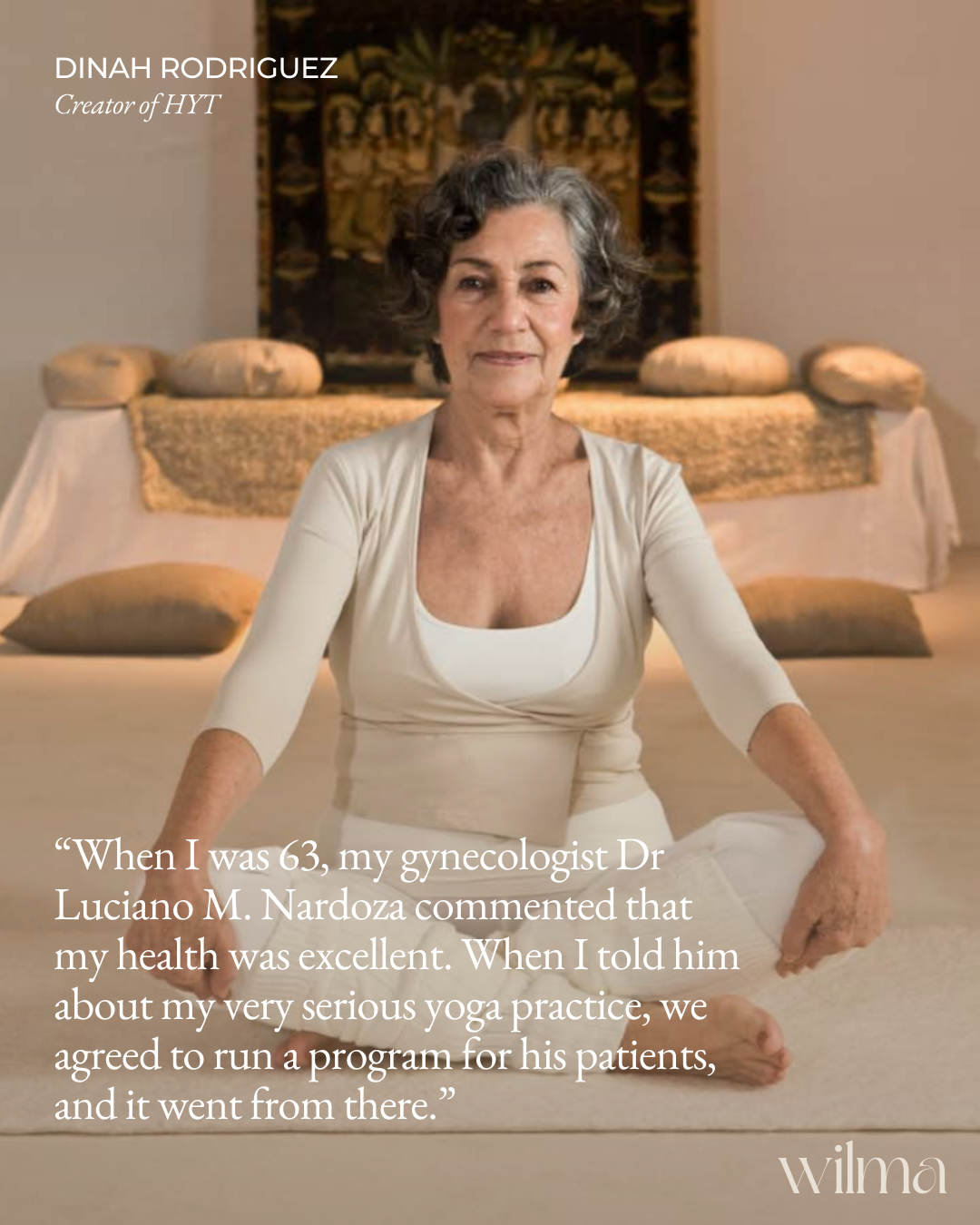
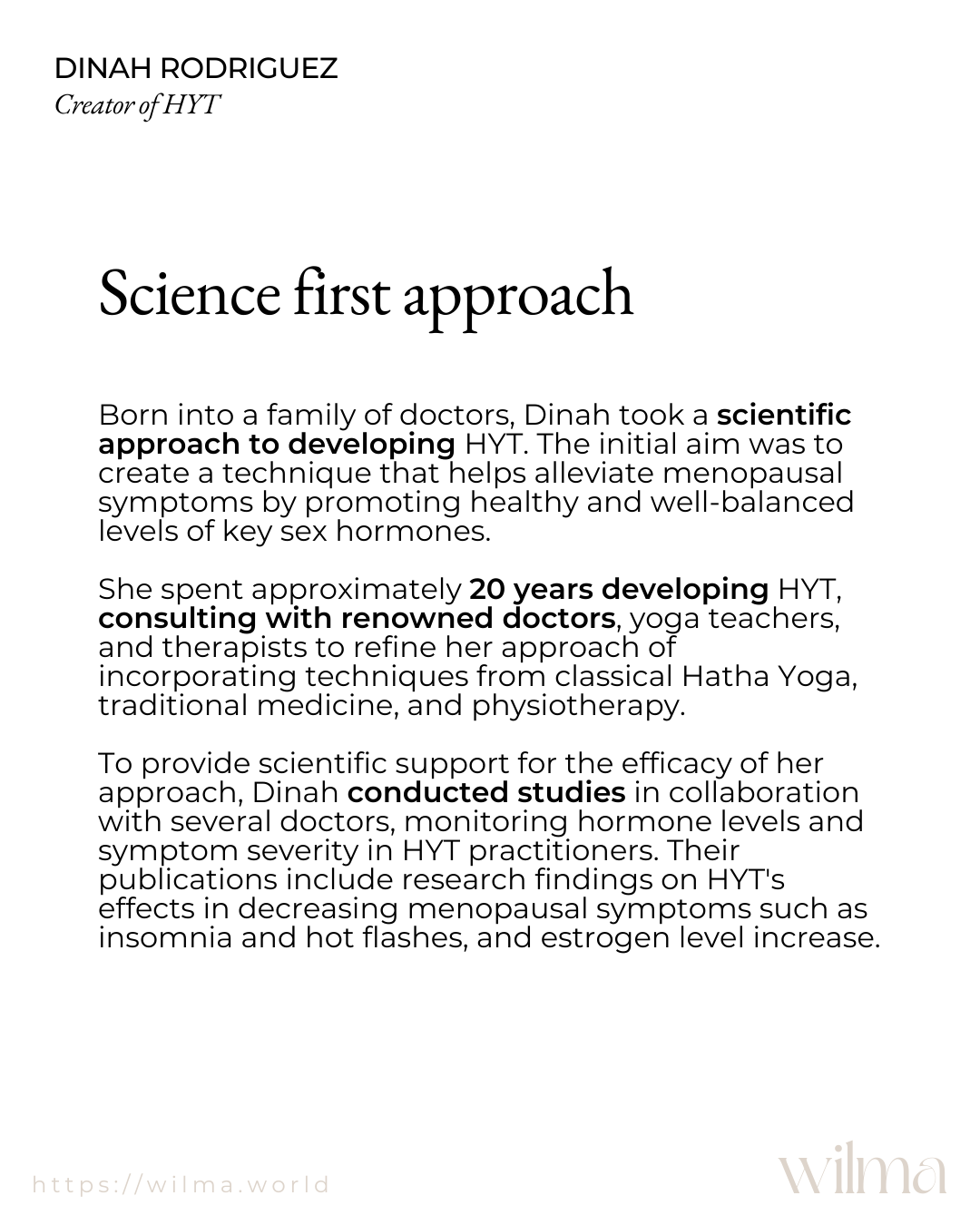
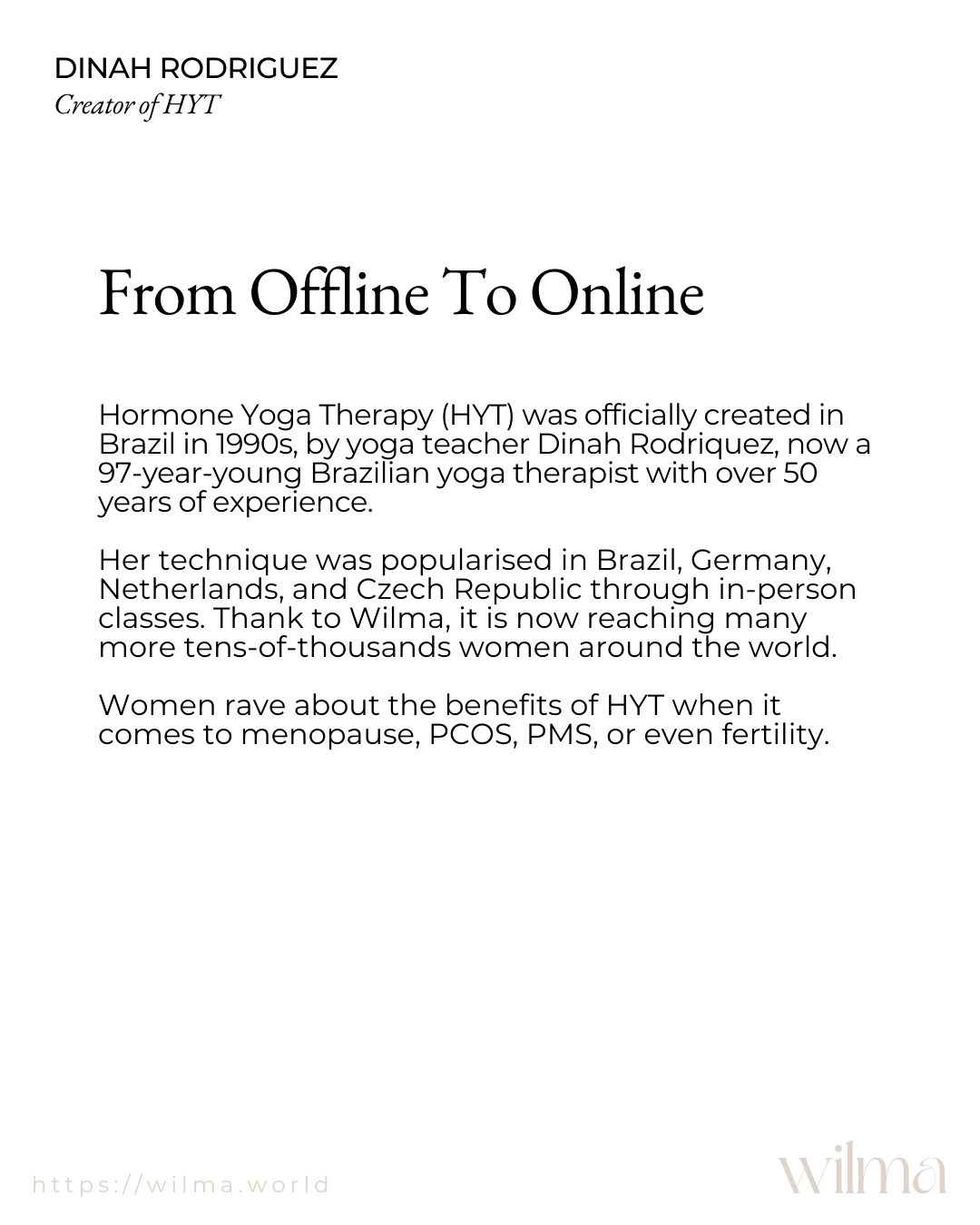
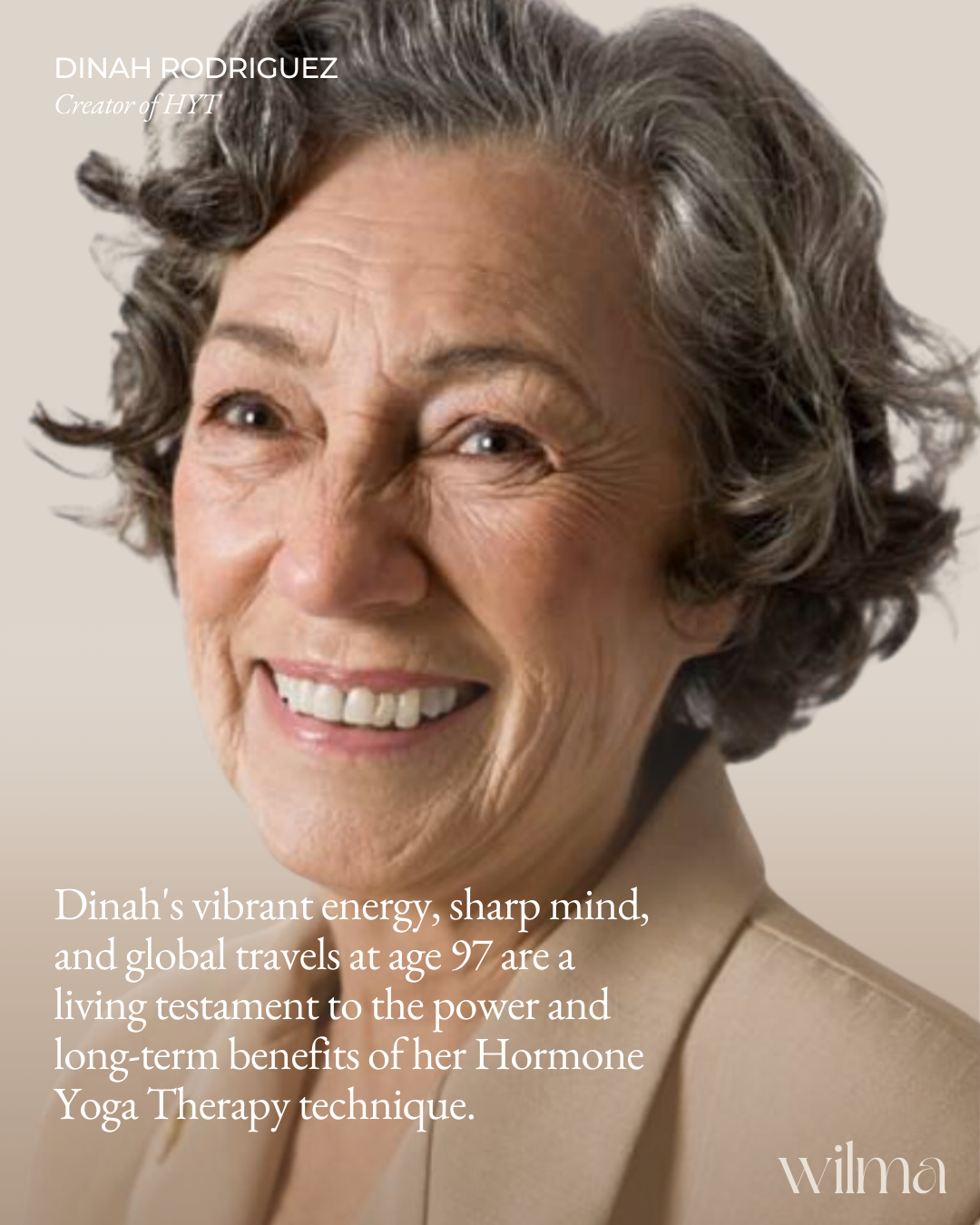
It was developed in the 1990s by Dinah Rodrigues, a Brazilian physiotherapist and yoga teacher, following her research into hormonal health and the endocrine system. She created a sequence that specifically targets the ovaries, thyroid, and adrenal glands — the three glands most directly affected by the hormonal changes of perimenopause and menopause.
The practice has since been taught and refined worldwide. It has been practised by thousands of women for over 30 years.
It is worth being clear about what makes it different from any other yoga class: a regular yoga class, however good, is not designed to stimulate your endocrine glands. Hormone yoga is. That distinction matters enormously when your body is going through hormonal change.
How Does Hormone Yoga Work?
The mechanism is more grounded than it might first sound.
Targeted poses that stimulate hormone-producing glands. Certain physical postures — held in specific ways, in a specific sequence — create direct stimulation of the ovaries, thyroid gland, and adrenal glands. These are the glands responsible for producing oestrogen, progesterone, testosterone, thyroid hormones, and cortisol. During perimenopause and menopause, their output becomes irregular and declines. Hormone yoga works by encouraging these glands to function more actively.
Breathing techniques that activate the parasympathetic nervous system. The breathwork in hormone yoga is not decorative. Specific breathing patterns shift your nervous system out of the stress response (sympathetic, "fight or flight") and into the recovery state (parasympathetic, "rest and digest"). This matters because chronically elevated stress hormones — particularly cortisol — actively suppress the production of sex hormones. Reducing cortisol creates the conditions for better hormonal balance.
Reduced cortisol, better hormonal environment. When your stress response is regulated, your body has more capacity to produce and balance oestrogen, progesterone, and testosterone. Many of the symptoms women experience in menopause are worsened significantly by chronic stress. Hormone yoga addresses both.
Time and consistency. A session takes 30 minutes. Most women practise 2–5 times per week. Most women notice meaningful changes within 3–6 weeks of consistent practice.
This is not about suppressing symptoms. It is about supporting the underlying system that produces them.
What Symptoms Can Hormone Yoga Help?
1. Low libido and loss of desire
For many women, this is the symptom they talk about least and feel most. Declining testosterone and oestrogen are the primary hormonal drivers of reduced libido, but chronically high cortisol makes it significantly worse. Hormone yoga addresses both: the targeted poses stimulate the ovaries (which produce both oestrogen and testosterone), and the breathwork reduces the cortisol that suppresses sexual desire. Most women report a gradual return of desire — not overnight, but real and sustained.
2. Fatigue and exhaustion
Not normal tiredness. The kind where you've slept eight hours and still wake up depleted. Adrenal fatigue — where the adrenal glands are overtaxed by sustained stress — is a common and underrecognised driver of menopausal exhaustion. Hormone yoga specifically targets the adrenal glands, and the parasympathetic activation from the breathwork helps your body shift from depletion mode to recovery mode. Women commonly experience improved energy within a few weeks of regular practice.
3. Stress and anxiety
Many women find that anxiety appears or worsens during perimenopause, even when their life circumstances haven't changed. Fluctuating hormones affect the brain's stress regulation systems directly. The breathing techniques in hormone yoga are specifically calibrated to downregulate the stress response — not as a temporary fix, but as a regular reset that accumulates over time. After a session, the shift in your nervous system is usually immediately noticeable.
4. Brain fog and poor concentration
The mental slowness that feels so unlike you. Oestrogen has a direct effect on cognitive function, memory, and mental clarity. As oestrogen fluctuates and declines, so can the sharpness you've relied on. By encouraging more stable hormonal output, and by reducing the cortisol that compounds cognitive difficulties, hormone yoga can help restore mental clarity. It is not instantaneous — but most women report meaningful improvement over consistent weeks of practice.
5. Sleep disruption
Difficulty falling asleep, waking at 3am, or sleeping through and still feeling unrestored — these are extremely common hormonal symptoms and among the most destabilising. Both low progesterone (which has a natural calming effect) and high cortisol disrupt sleep architecture. Hormone yoga works on both sides: stimulating progesterone production and reducing cortisol. Women commonly report better sleep quality as one of the earlier changes they notice.
6. Mood swings and irritability
The feeling of being someone you don't recognise — snapping at people you love, swinging between fine and furious, tearful for no reason you can name. Hormonal fluctuation directly affects neurotransmitter activity, including serotonin. Hormone yoga supports more stable hormonal output, which over time supports more stable mood. The parasympathetic activation also means you're regularly spending time in a state of genuine calm, which builds emotional resilience.
7. Weight changes
Hormonal shifts affect how your body stores and metabolises fat, particularly around the abdomen. Elevated cortisol drives abdominal fat storage directly. While hormone yoga is not a weight loss programme, it supports hormonal conditions that make healthy weight more sustainable — and the cortisol reduction specifically targets one of the most common drivers of stubborn menopausal weight gain.
8. Hot flushes and night sweats
Hot flushes are caused by the hypothalamus becoming more sensitive to temperature changes as oestrogen declines. Hormone yoga's support of oestrogen production may help reduce their frequency and intensity over time. The parasympathetic activation also has a direct cooling effect on the nervous system's temperature dysregulation. Women commonly experience some reduction in hot flushes, though results vary more here than with other symptoms.
Hormone Yoga vs Regular Yoga
Both have value. They are not the same thing.
Regular yoga — whether it's a vinyasa class, a yin session, or a restorative practice — offers genuine benefits: flexibility, strength, stress relief, presence. If you already practise yoga and love it, continue. Hormone yoga does not replace it.
But regular yoga is not designed to stimulate your hormone-producing glands. It does not include the specific poses, breathwork, or sequences required to target the ovaries, thyroid, and adrenal glands. A yoga class that makes you feel calmer is doing something. A hormone yoga session that specifically stimulates your endocrine system is doing something different.
Regular yoga — whether it's a vinyasa class, a yin session, or a restorative practice — offers genuine benefits: flexibility, strength, stress relief, presence. If you already practise yoga and love it, continue. Hormone yoga does not replace it.
But regular yoga is not designed to stimulate your hormone-producing glands. It does not include the specific poses, breathwork, or sequences required to target the ovaries, thyroid, and adrenal glands. A yoga class that makes you feel calmer is doing something. A hormone yoga session that specifically stimulates your endocrine system is doing something different.
| Regular Yoga | Hormone Yoga | |
| General flexibility / strength | ✅ | ✅ |
| Targets hormone glands | ❌ | ✅ |
| Specific breathing for hormones | ❌ | ✅ |
| Designed for menopause | ❌ | ✅ |
| Time per session | 60–90 min | 30 min |
If you have 30 minutes and you want to work specifically on your hormonal symptoms, hormone yoga is the more targeted choice.
Who Is Hormone Yoga For?
Hormone yoga is well-suited for:
- Women in perimenopause (typically from the early 40s onward) who are experiencing hormonal symptoms but may not be in full menopause yet
- Women in menopause — whether natural, surgical, or medically induced
- Women experiencing hormonal symptoms at any age — including those with conditions affecting hormonal balance
- All fitness levels — you do not need to be flexible, strong, or experienced in yoga. You need a carpet, comfortable clothes, and 30 minutes. That is genuinely all.
- Women on HRT — hormone yoga is not a replacement for hormone replacement therapy. It is complementary. Many women on HRT practise it and find the combination more effective than either alone.
Who Should Not Do Hormone Yoga?
Hormone yoga is not appropriate for everyone. Please do not practise it if:
- You have a hormone-dependent cancer (including oestrogen-receptor positive breast cancer, ovarian cancer, or endometrial cancer). The practice is designed to stimulate hormone production — this is not appropriate if you have a hormone-sensitive cancer. Please consult your oncologist before beginning any hormonal practice.
- You are pregnant. The stimulation of the ovaries and adrenal glands is not appropriate during pregnancy.
- You have hyperthyroidism or an overactive thyroid. Because the practice specifically targets the thyroid gland to stimulate its function, it is not suitable if your thyroid is already overactive.
- You are currently receiving treatment for certain reproductive conditions. If you have a complex or serious reproductive health condition, speak to your doctor before starting.
If you are unsure, ask your GP or specialist. This is a genuine contraindication list, not a formality.
What Does a Hormone Yoga Session Look Like?
There is nothing intimidating about it. Here is what to expect.
What you need: A yoga mat or comfortable carpet. Loose, comfortable clothing — pyjamas are completely fine. No equipment, props, or special kit required.
How long: 30 minutes. That is it. This is not a 90-minute power yoga commitment. It fits in a morning before work, a lunch break, or an evening wind-down.
What happens in a session:
You begin with breathing preparation — learning to connect with the specific breath patterns that will accompany the poses. This is not complex, but it does take a few sessions to feel natural. Be patient with yourself here.
You begin with breathing preparation — learning to connect with the specific breath patterns that will accompany the poses. This is not complex, but it does take a few sessions to feel natural. Be patient with yourself here.
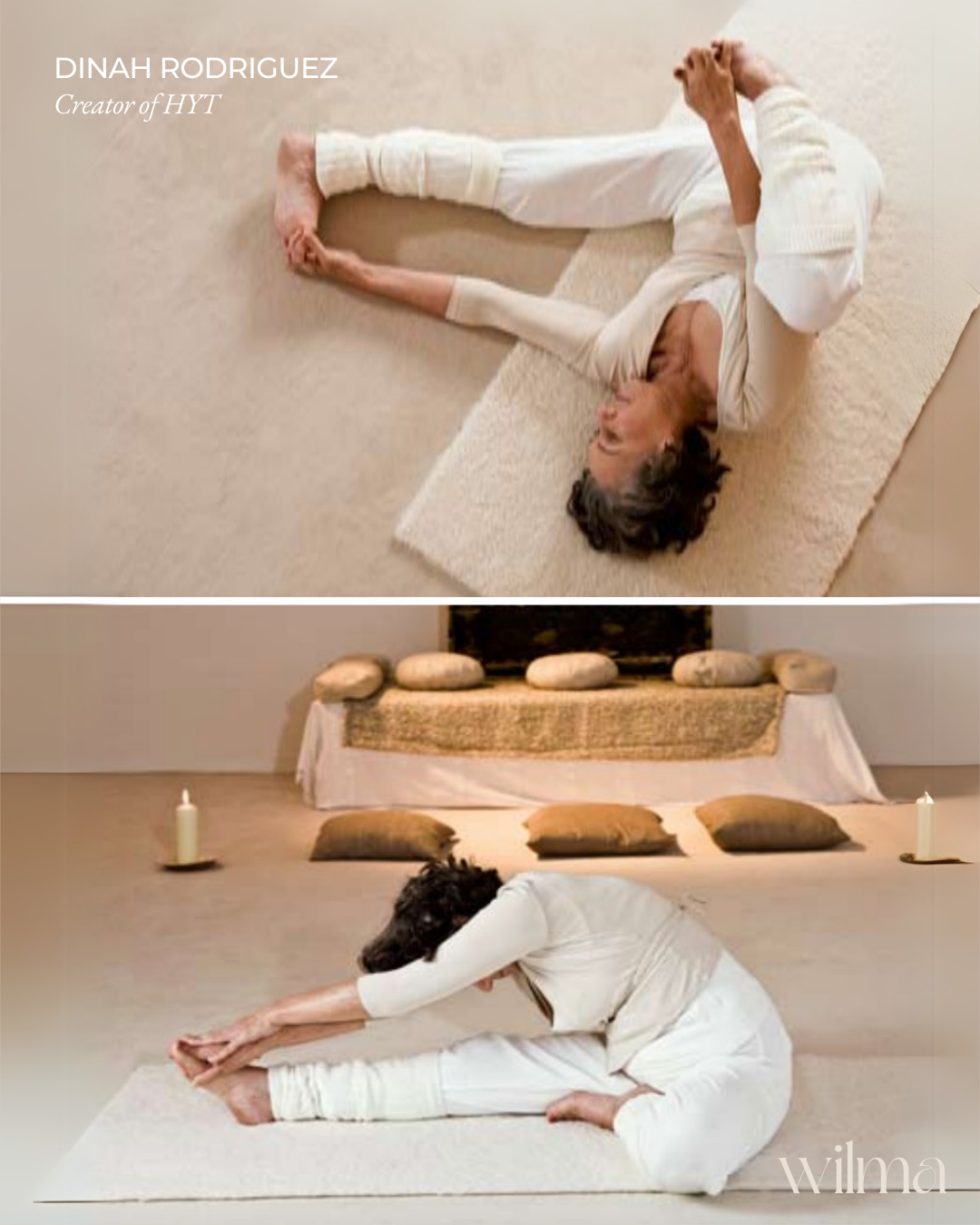
You move through a set sequence of postures. Each pose has a specific purpose: some target the ovaries directly, some stimulate the thyroid, some work with the adrenal glands. The postures are held with active breath rather than passive holding.
Between poses, you use energy-directing techniques — you may have heard these called mudras or bandhas in other yoga contexts. In hormone yoga, these are used to direct the stimulation produced by the poses toward the specific glands you are working with.
You close with a short period of rest and integration.
What it feels like: Most women describe feeling noticeably calmer after a session, often from the first practice. Some feel warmth or gentle activation in the pelvis or lower abdomen. Some notice nothing particular immediately and then find over following weeks that things have shifted.
It is gentle. It is accessible. It is 30 minutes. And it is specifically designed for exactly what you are going through.
Frequently Asked Questions
Do I need to be flexible?
No. Hormone yoga does not require any particular level of flexibility. The poses are designed to be accessible to women across a wide range of fitness levels and mobility. If you can sit on the floor (or a chair, in modified versions), you can do hormone yoga.
Can I do it alongside HRT?
Yes. Hormone yoga and HRT are not in competition. They work on different levels — HRT replaces hormones externally, hormone yoga supports your body's own production and hormonal environment. Many women find the combination more effective than either alone. If you have concerns about your specific HRT protocol, speak to your prescribing doctor.
How long before I see results?
Most women notice the first changes within 3–6 weeks of practising 2–5 times per week. The most commonly reported early changes are improved sleep, reduced anxiety, and better energy. Libido and other symptoms typically follow with continued practice. Consistency matters more than intensity — practising regularly at a modest pace is more effective than sporadic intense sessions.
How often should I practise?
The recommended frequency is 2–5 sessions per week. Daily is ideal if possible, but even two or three times a week produces meaningful results. What matters most is regularity rather than frequency — a sustainable practice of three sessions per week sustained over months will outperform an intense week followed by nothing.
What equipment do I need?
A yoga mat or soft carpet and comfortable, loose clothing. That is genuinely all. No props, no equipment, no special purchases required.
Is hormone yoga the same as regular yoga?
No. Hormone yoga is a specific practice with a specific purpose. It uses yoga-derived postures and breathwork, but it is not a yoga style in the general sense. A regular yoga class does not replicate what hormone yoga does. The distinction is in the targeting: hormone yoga is specifically designed to stimulate the ovaries, thyroid, and adrenal glands. Standard yoga classes are not.
Can I do it if I have bad joints or chronic pain?
Many women with joint issues practise hormone yoga. The poses are gentle and do not require high-impact movement. That said, if you have a specific joint condition, injury, or chronic pain situation, it is worth checking with a physiotherapist or doctor before starting — particularly for poses that involve the hips, knees, or spine.
Is it safe if I have thyroid issues?
It depends on your condition. If you have an underactive thyroid (hypothyroidism), hormone yoga may be beneficial, as it is designed to stimulate thyroid function. If you have an overactive thyroid (hyperthyroidism) or Graves' disease, hormone yoga is not recommended, as it may further stimulate an already overactive gland. If you are taking thyroid medication, speak to your doctor before starting.
Ready to Try Hormone Yoga?
If any of what you've read here resonates — the fatigue, the lost spark, the sleep, the feeling of not quite being yourself — this is what the programme is for.
Hormone Yoga for Menopause & Perimenopause is a self-paced online program of 12 video sessions, each 30 minutes. You can start today, practise at your own pace, and access it from any device.
You do not need experience. You do not need to be flexible. You need 30 minutes and a bit of floor with carpet.

Copyright © 2025



Created with